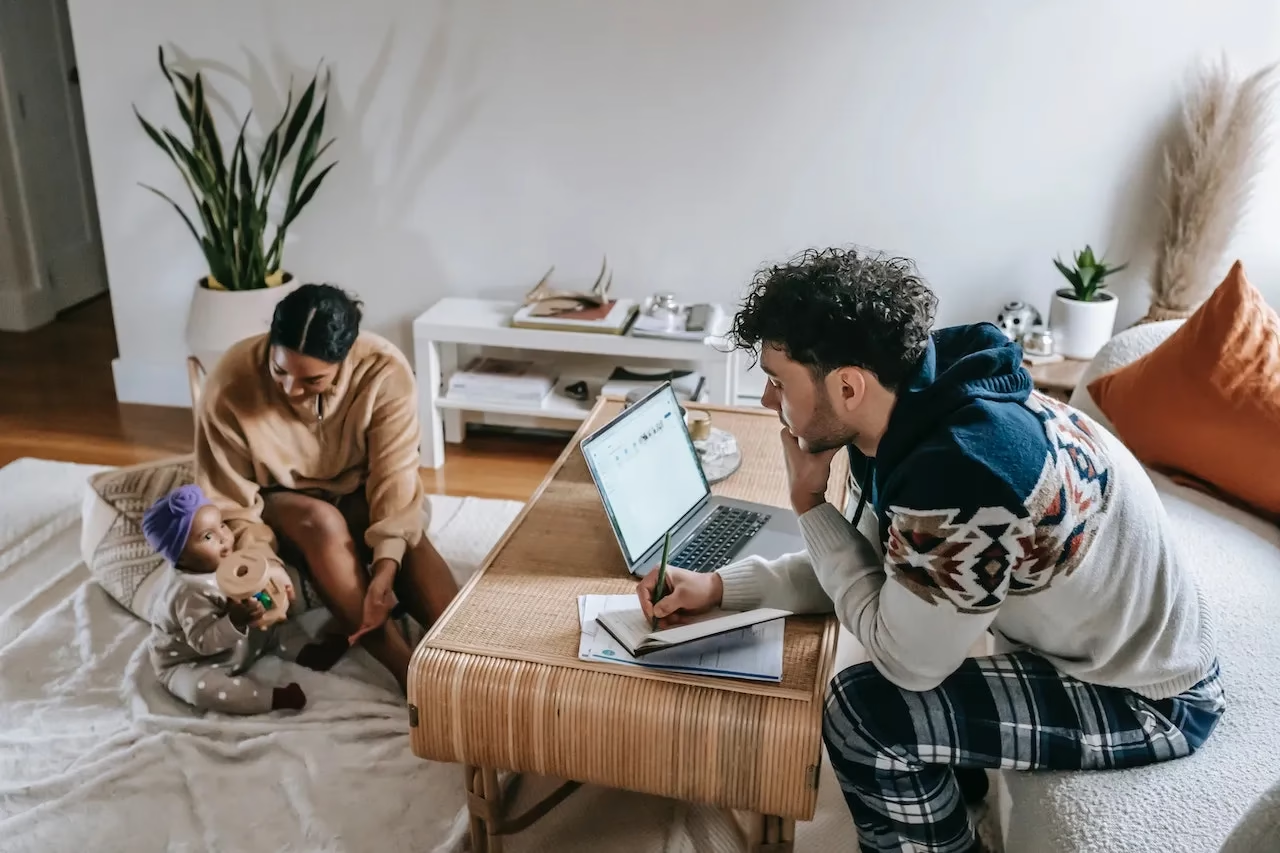
Working from home is often presented as the perfect upgrade from traditional office life: no daily commute, more comfort, flexible hours, and the idea that you will finally be in control of your time. Social media is full of carefully staged photos of clean desks, warm coffee, and people in hoodies working peacefully from their couch. At first glance, it looks like a dream. But behind these images, the reality of remote work is far more complex. Working from home can give you more freedom, but it can just as easily create new forms of stress, isolation, and confusion if you are not prepared for it. The real question is not “Is working from home good or bad?” but rather “Am I ready to handle what working from home really involves on a daily basis?” This distinction matters, because remote work is not just a change of location; it is a complete change in how you manage your time, your energy, and your responsibilities.

One of the biggest advantages of working from home is the control you gain over your schedule. In a traditional job, your day is built around external constraints: transportation, fixed office hours, meetings at specific times, and the constant presence of other people. When you work remotely, your time becomes more flexible. You can often start earlier or later depending on your natural rhythm, take breaks when your energy drops, and organize your tasks according to what matters most instead of what fits into someone else’s calendar. This flexibility can significantly improve your quality of life. You might sleep better, feel less rushed in the morning, and find it easier to focus when you finally sit down to work. However, this flexibility is a double-edged sword. Without self-discipline, the same freedom that could have helped you can quickly destroy your productivity. Days start to blend together, work is constantly postponed “for later,” and you slowly develop the illusion that you still have time, until deadlines suddenly become emergencies and stress builds up in silence. Flexibility only becomes a true advantage when it is combined with a clear structure and honest self-management.
Another very real benefit of working from home is financial. When your office is at home, you naturally spend less on transportation, eating out, clothes for the office, and all the small daily expenses that seem insignificant on their own but add up over months and years. There is no train pass or gas bill just to go sit in front of a screen somewhere else. You can cook your own meals, dress more simply, and avoid certain social expenses that come with office culture. For many people, this doesn’t just mean saving money; it means finally having a bit of breathing room at the end of the month. But it is important to understand that working from home does not magically increase your income. What it does is give you the opportunity to use your money differently. Some people take those savings and invest in learning new skills, improving their workspace, or building side projects that might eventually generate extra income. Others simply increase their comfort without changing anything else. The impact depends entirely on how consciously you manage this new financial space and whether you treat it as a tool for growth or just an excuse to consume a little more.
Your environment is another key aspect of the remote work experience. In a traditional office, you rarely control your surroundings. You adapt to open spaces, noisy colleagues, bad lighting, uncomfortable chairs, and temperatures that never seem ideal. At home, the opposite happens: you are responsible for designing the environment in which you will spend a large part of your life. A well-organized home office, even in a small corner of a room, can help you concentrate, reduce physical pain, and create a sense of calm. You choose your chair, your desk height, your screen position, and the objects that surround you. This can transform the way you feel during a workday, both physically and mentally. However, this control also brings responsibility. If you decide to work from your bed, from the couch in front of the TV, or in a space full of distractions, your brain will constantly receive mixed signals. It will not clearly know when it is time to work and when it is time to relax. Over time, this confusion leads to fatigue, lack of motivation, and a feeling of being permanently “half working, half resting” without really doing either properly. A dedicated workspace, even modest, becomes a psychological anchor that tells your brain: “Here, we work. Elsewhere, we rest.”

Behind the advantages, there is a side of working from home that is much less discussed but very real: the emotional and psychological cost. When you go to an office, you interact with other people almost without thinking about it. You say hello, you share small moments, you complain about a meeting, you laugh at a situation. All those little interactions may not feel important, but they create a sense of human connection. When you work from home, especially if you live alone or have a quiet household, those interactions almost disappear. At first, the silence may feel peaceful. You enjoy not being interrupted. But as the days turn into weeks and months, isolation starts to slowly affect your energy and mood. You may feel less motivated, less creative, or strangely tired even when you have not worked intensively. This is not just “being lazy” or “unmotivated.” It is the impact of a lack of human contact. Humans are social beings, and remote work without any intentional social interaction can become emotionally heavy, no matter how independent or introverted you believe you are. The danger is that this shift often happens gradually, so you only notice it when your motivation has already dropped.
Another harsh truth about working from home is that the line between work and personal life becomes blurred. In an office job, even if you have long hours, there is usually a clear moment where you leave the building and physically step out of your work environment. The commute, even when tiring, acts as a psychological transition: work is behind you, and home is now your space. At home, your workspace and your living space are often the same. Your laptop is on the table, your phone is in your pocket, and your emails are accessible at any time. It becomes extremely easy to check “just one more message,” finish “just one more task,” or open your computer again after dinner “just for a minute.” You might think that this helps you stay productive or “on top of things,” but in reality, it often prevents your brain from truly resting. Over time, you may feel as though you are always working, even when you are technically off. Your evenings and weekends lose their meaning, and you start to experience a quiet form of burnout where you are exhausted but never fully disconnected. This is why boundaries are essential in remote work. Just because you can work at any time does not mean you should, and learning to close the laptop, put the phone away, and mentally log out is a crucial skill.
Distractions are another major challenge of working from home, and they are more powerful than most people expect before they experience them. At home, everything that you normally use to relax or escape from reality is just a few steps away. Your bed, your console, your TV, your social media feeds, your fridge, your pets, your family, your hobbies—all of them exist in the same physical space as your work. In an office, the environment itself sends a clear signal: “You are here to work.” At home, you must send that signal yourself, consciously and repeatedly. Without clear rules, your attention is constantly pulled in different directions. You tell yourself you will only take a five-minute break to watch something or scroll a bit, and suddenly thirty minutes are gone. You get up to grab a snack and end up cleaning the kitchen instead of finishing that important task. The problem is not that breaks are bad; the problem is that uncontrolled and unplanned breaks end up controlling your entire day. Remote work demands a level of self-management that many people have never had to develop before, and it quickly reveals how you truly behave when nobody is watching.

Not everyone is suited for working from home, and it is important to admit this honestly instead of pretending that remote work is a universal solution that works for everyone in the same way. If you struggle to start tasks without external pressure, if you constantly postpone important work, if you rely on other people to keep you accountable, remote work can become a trap. The freedom it offers will not fix these habits; it will expose them. On the other hand, this exposure can also be an opportunity. For some people, working from home becomes the moment when they finally realize how much structure they actually need. They stop waiting for motivation and start building routines. They learn to create schedules, to set clear goals, and to organize their days instead of just surviving them. Remote work, in this sense, acts like a mirror: it reflects your discipline, your weaknesses, and your capacity to take responsibility for your time. It can be uncomfortable, but it can also be the beginning of real personal growth.
There are also people who truly thrive in remote work environments. These individuals are not necessarily the most talented or intelligent; they are simply the most consistent and intentional. They understand that working from home is not about doing less, but about working differently. They set clear start and end times for their workday and respect them as if they were going to a physical office. They create a physical space dedicated to work, even if it is just a small corner of a room with a chair and a desk that signal “this is where work happens.” They plan their tasks the day before so that they do not lose time each morning deciding what to do. They also intentionally maintain a social life outside of work through calls, shared activities, online communities, or time with family and friends, because they know that isolation slowly kills motivation. For them, remote work becomes a way to align their job with the life they want to live, instead of building their life around their job. They use the freedom of remote work to protect their health, their relationships, and their long-term goals, rather than to just avoid the office.

In the end, working from home is neither a miracle nor a mistake. It is a lifestyle choice with real consequences. It will not magically solve your problems, and it will not automatically ruin your life. What it will do, very reliably, is amplify the way you already manage your time, your emotions, your habits, and your responsibilities. If you have the courage to build structure, to protect your boundaries, and to be honest with yourself about your weaknesses, remote work can offer a level of freedom and balance that many people never experience. If you try to live it as if it were a permanent holiday, it will sooner or later confront you with stress, guilt, and exhaustion. The most important question to ask yourself is not “Do I want to work from home?” but “Am I ready to behave like someone who can handle the reality of working from home every single day?” That question is the real starting point of any serious decision about remote work.