The Reality of the Digital Nomad Lifestyle: Freedom, Challenges, and What You Should Know

The digital nomad lifestyle is often portrayed as the ultimate form of freedom. People imagine themselves working from tropical beaches, mountain cafés, or stylish apartments in distant cities while earning money through a laptop. On social media, this lifestyle looks effortless, adventurous, and deeply fulfilling. But behind the carefully chosen images and short captions, reality is far more complex. Being a digital nomad is not just about changing locations; it is about building your entire life on uncertainty, self-discipline, and constant adaptation. For some people, this lifestyle becomes a dream come true. For others, it quietly becomes exhausting.
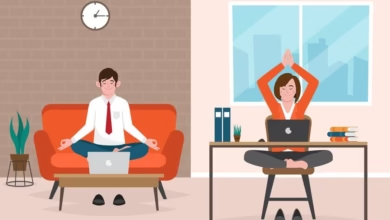
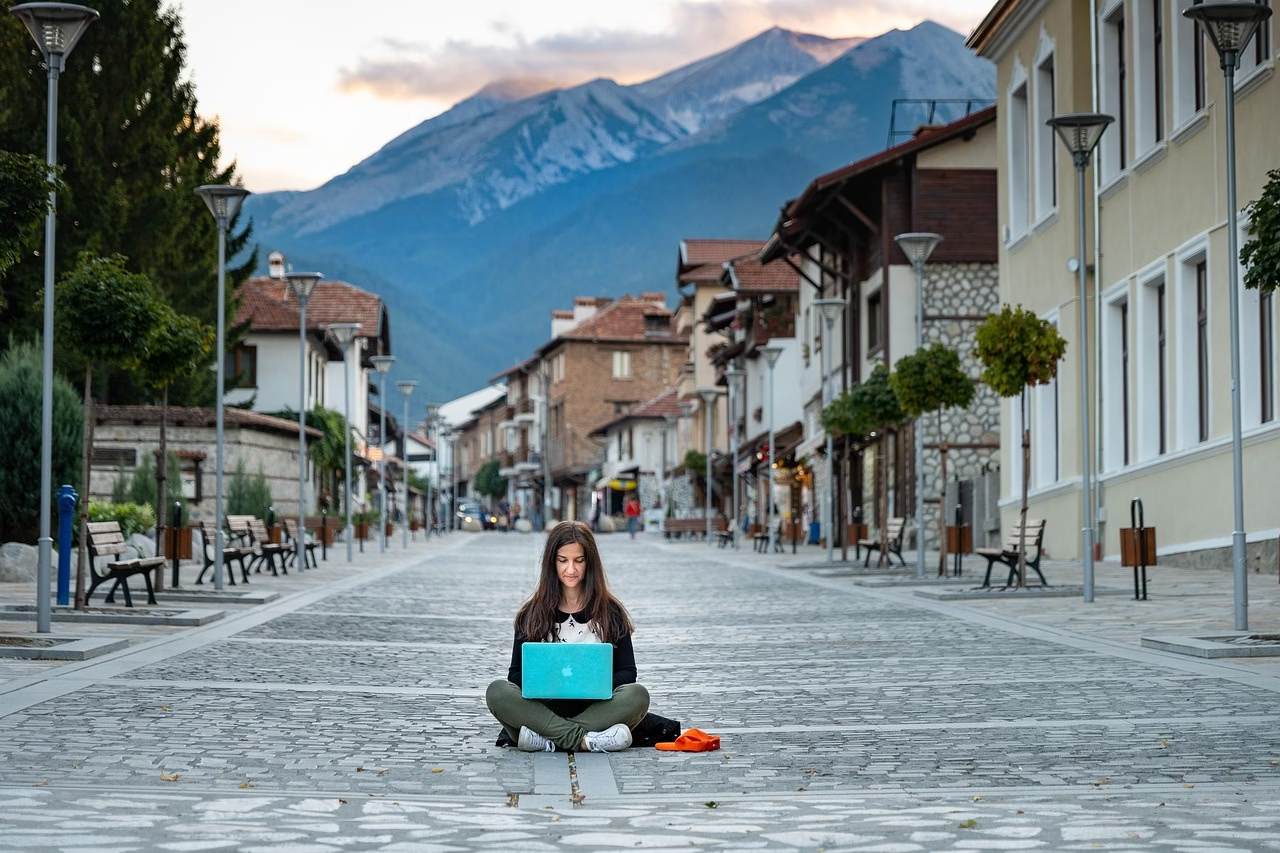
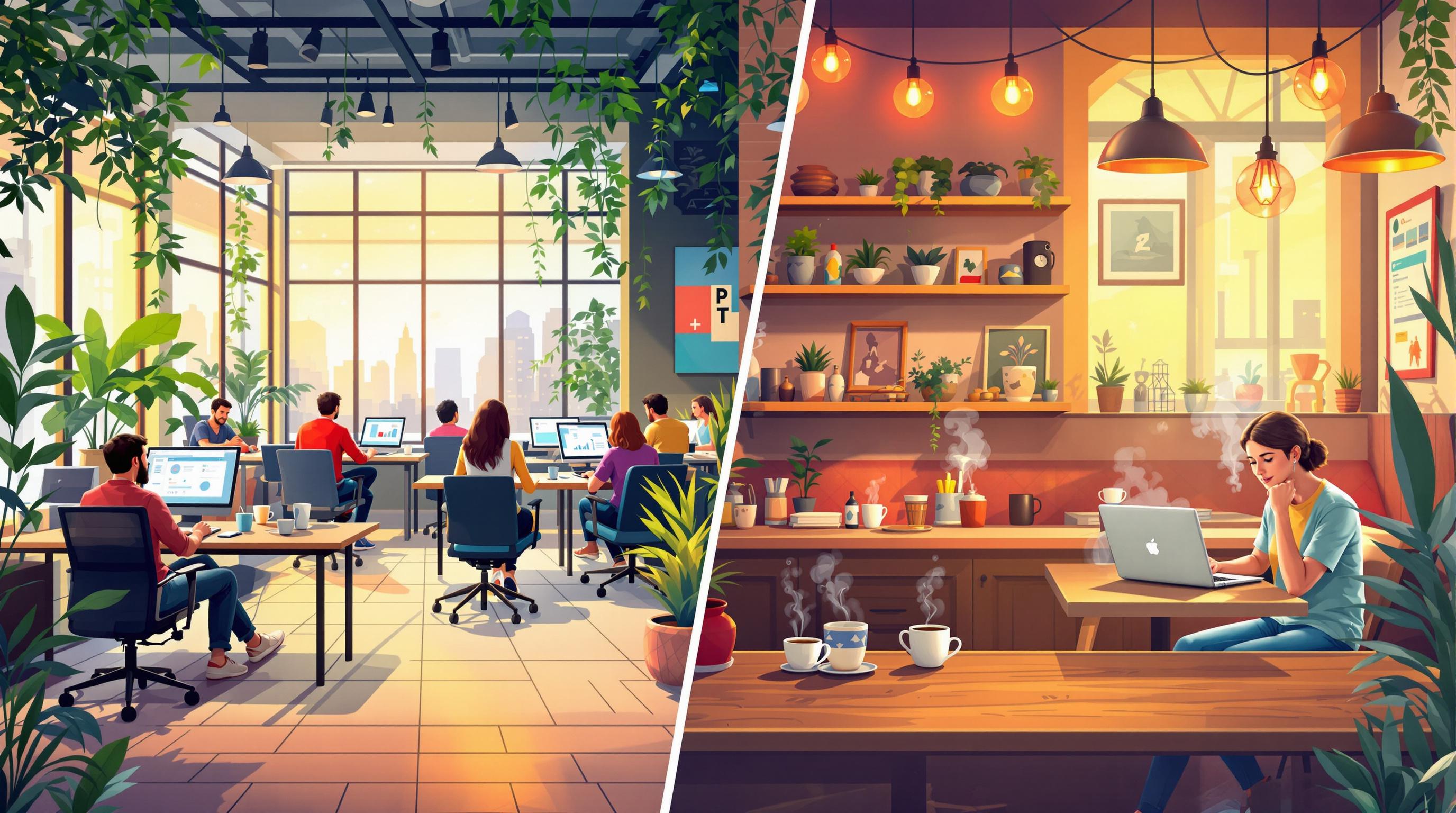
At its core, the digital nomad lifestyle means working remotely while traveling or living in different places, without a permanent base. Instead of commuting to an office, you carry your job wherever you go. Your workplace might be a café in Portugal this month, an apartment in Thailand the next, and a co-working space in Mexico after that. But what is rarely discussed is that this freedom replaces one kind of structure with another. You are no longer managed by an office or a boss watching over your shoulder. You manage yourself. Your income, your rhythm, your location, and your stability are placed directly in your hands. That level of control can feel empowering — and overwhelming.
One of the greatest benefits of the digital nomad lifestyle is independence. You decide where you live, how you work, and how you spend your days. For many people, this is life-changing. There is no commuting, no office politics, and no daily routine imposed by others. Instead, you build your own system. You choose your time zone, your schedule, and your environment. This can create a deep sense of autonomy and satisfaction. Every day feels intentional rather than automatic.
Another significant advantage is the ability to adjust your cost of living. A digital nomad earning in a strong currency can choose to live in places where daily expenses are much lower. This can dramatically increase quality of life without increasing income. A person who feels financially trapped in one country may suddenly experience comfort, freedom, and new opportunities simply by relocating. This flexibility allows some people to save money faster, invest in learning new skills, or enjoy experiences they could never afford elsewhere.
Cultural richness is also one of the most rewarding aspects. Living in foreign environments exposes you to new ways of thinking, working, and living. You meet people from different backgrounds, experience different traditions, and learn to navigate unfamiliar systems. Over time, this expands your worldview. Many digital nomads say they grow faster in one year of travel than they did in five years of routine living. New environments challenge assumptions and force adaptation. This process builds emotional resilience and creativity.

However, the darker side of the lifestyle is rarely shown. Freedom can easily become instability. Constant movement means constant decision-making. Where to live next, how long to stay, whether the connection is reliable, whether work will remain consistent — all of these questions appear repeatedly. Mentally, this exhaustion adds up. Living without a stable base creates a subconscious sense of impermanence. You may never fully relax because everything is temporary.
Loneliness is another silent enemy. While travel seems social on the surface, meaningful connections are difficult to maintain when you move often. Casual conversations are easy. Deep relationships are not. Over time, you may begin to feel emotionally disconnected. You attend gatherings, make friends temporarily, and then leave again. The excitement eventually gives way to a strange emotional emptiness. Human beings naturally seek connection, and when stability disappears, the need for belonging becomes stronger. Some people thrive socially as nomads. Others quietly feel isolated without understanding why.
Work boundaries also blur dangerously. When you are both traveling and working, your job follows you everywhere. You wake up and work. You explore and work. You rest and still think about work. Because you are not in a fixed office environment, it becomes easier to work constantly without noticing it. The result is exhaustion disguised as ambition. Many nomads experience burnout not because they work too hard, but because they never truly stop working.

There are also very practical challenges that people often underestimate. Internet reliability becomes critical. Housing must be found repeatedly. Legal questions about visas, taxation, and residency appear constantly. Healthcare systems vary from country to country. Even simple things like banking or receiving packages become complicated. The digital nomad lifestyle requires constant problem-solving. If you enjoy routine and predictability, this lifestyle will likely cause stress rather than freedom.
Financial uncertainty is another pressure point. Many digital nomads work as freelancers or contractors. Income can be inconsistent. Some months are strong; others are slow. Without proper planning, a single bad period can threaten your entire lifestyle. Nomad life gives freedom, but it also removes safety nets. There is no employer providing insurance, stability, or guarantees. Everything depends on your preparation and discipline.
The digital nomad lifestyle also challenges identity. Traditional careers provide a sense of structure and status. Titles, offices, and organizations give a feeling of belonging. As a nomad, identity becomes more abstract. You may struggle to define yourself socially. This can be freeing, but it can also feel disorienting. Some people thrive without labels. Others feel lost without them.
Despite the difficulties, there are people who flourish in this lifestyle. They tend to share several qualities: adaptability, independence, emotional resilience, and self-discipline. These individuals are comfortable with uncertainty and see change as opportunity rather than threat. They build routines even when constantly moving. They seek community intentionally. They manage finances carefully. For them, digital nomad life becomes a long-term lifestyle instead of a short-term fantasy.
In contrast, people who struggle with the digital nomad lifestyle usually rely heavily on external structure. They need consistency, social familiarity, and stable environments to function well. For these individuals, nomadic living can quickly cause stress symptoms such as anxiety, fatigue, and emotional exhaustion. The lifestyle itself is not the problem. The mismatch between personality and environment is.
One of the biggest mistakes people make is romanticizing movement. Travel itself does not equal happiness. New places can energize you at first, but excitement is temporary. Eventually, daily life returns — only now it happens in unfamiliar environments with fewer emotional anchors. Without a strong internal sense of purpose, movement becomes escape rather than adventure.
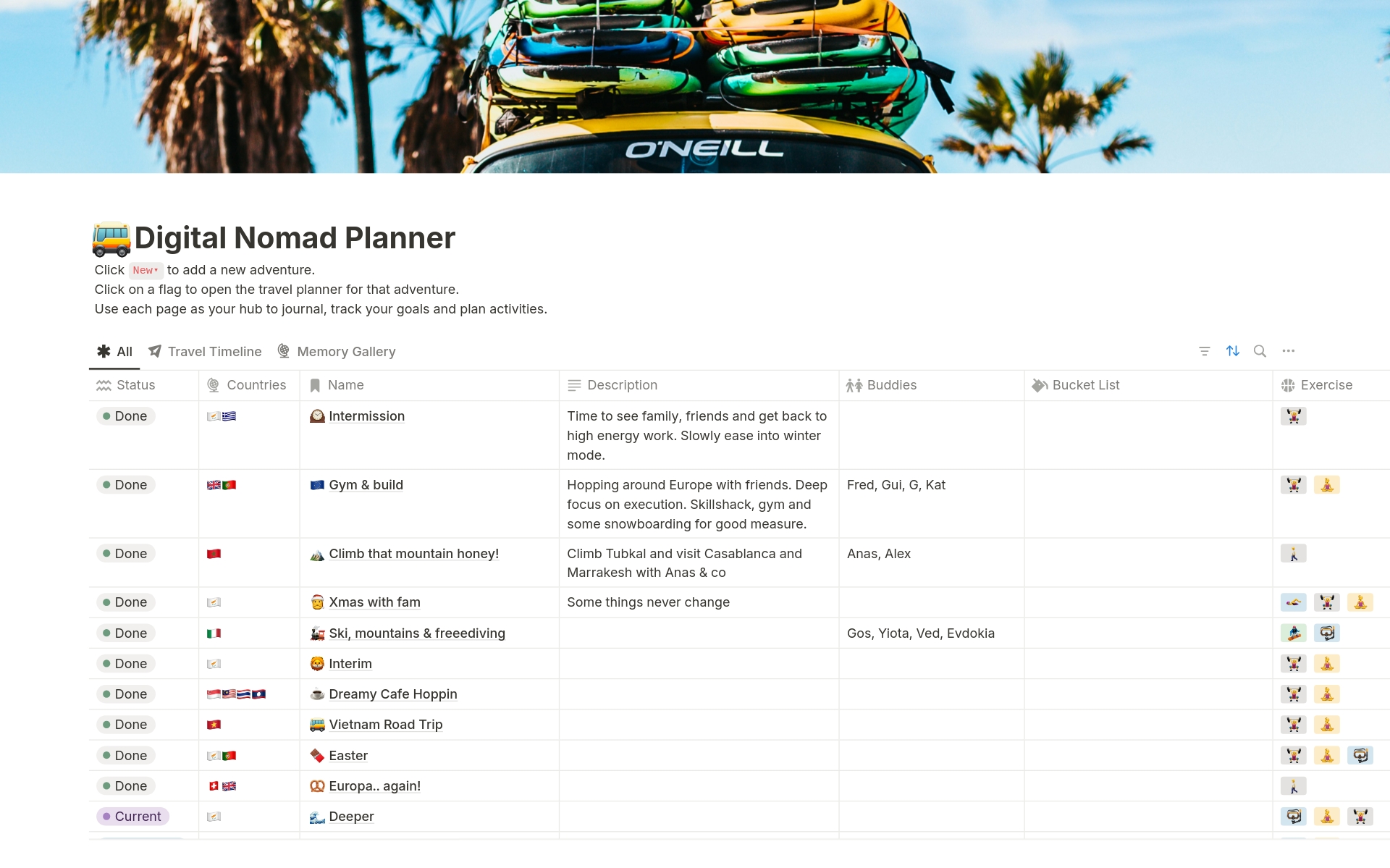
A healthier approach to the digital nomad lifestyle is to treat it as an experiment rather than a permanent identity. Instead of committing blindly, many people begin by testing remote work locally. They simulate nomad life by working from different locations in their own city or country. This reveals how they handle structure, independence, and isolation before adding the complexity of international travel.
Success as a digital nomad rarely comes from chasing aesthetic freedom. It comes from building systems. Daily routines, financial planning, reliable work processes, and emotional support networks make the difference between excitement and burnout. The lifestyle rewards those who prepare. It punishes those who improvise constantly.
Ultimately, the digital nomad lifestyle is neither magical nor destructive by default. It amplifies what already exists inside you. If you are organized, adaptable, and comfortable being alone, the lifestyle can become deeply fulfilling. If you crave stability, community, and routine, nomadic living may feel emotionally costly rather than liberating.
Digital nomad life should not be chosen because it looks impressive, but because it fits your personality and long-term goals. It is not about escaping life; it is about designing it. Some people design a life across countries. Others design one within a community. Neither path is better — only different.
The truth is simple: working from anywhere sounds powerful, but living without anchors requires strength. Choose the lifestyle that supports who you are, not the one that looks exciting to others.