
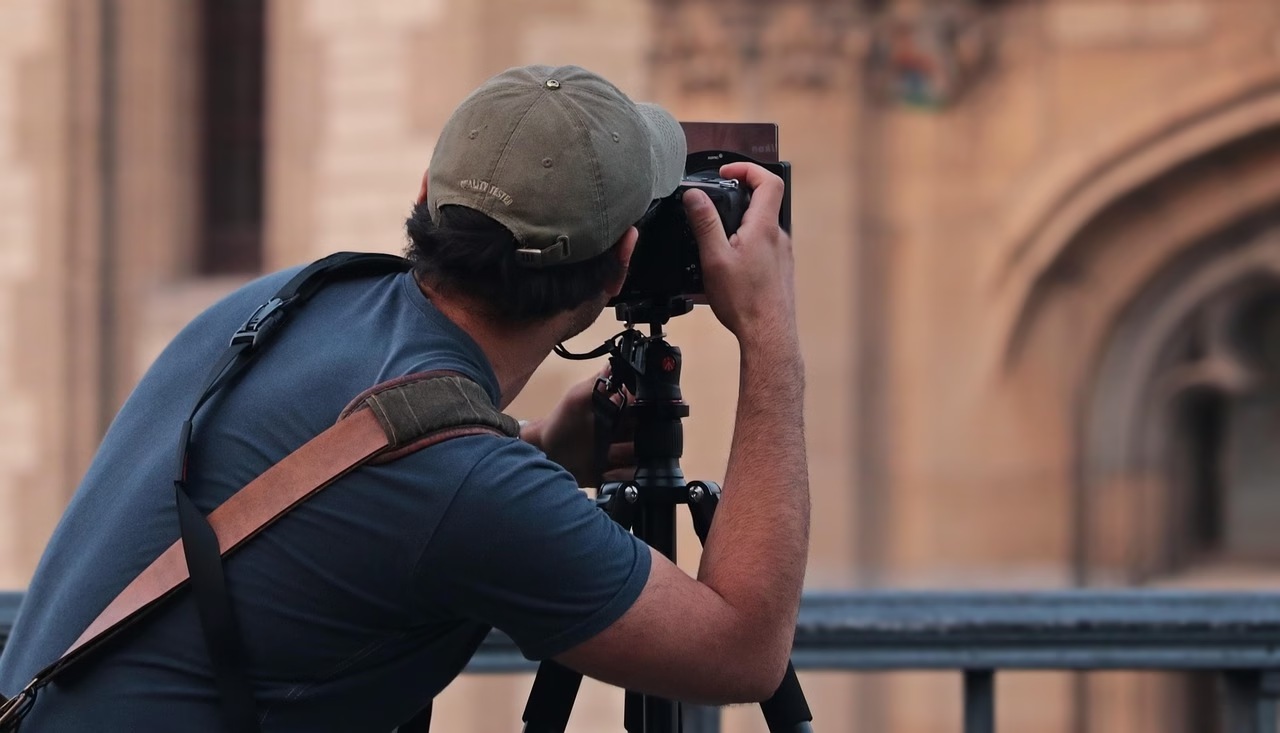
Photography is far more than simply clicking a button. At its core, it is the art of seeing. A good photograph is not defined by the price of the camera, the sharpness of the lens, or the complexity of the gear. It is defined by intention. The photographer decides what matters in a scene and arranges visual elements to guide the viewer’s attention. When this is done well, an ordinary moment becomes a powerful image that tells a story, evokes emotion, and leaves an impression.
One of the first concepts many photographers encounter is the rule of thirds. While it may sound technical, it is actually a simple way to make images feel more natural and balanced. When you divide a frame into three equal sections horizontally and vertically, the intersections of those lines become strong points of interest. Placing your subject near one of these areas rather than in the center creates visual tension and movement. The photograph feels more alive. It invites the viewer’s eye to travel rather than remain fixed in one spot. Over time, experienced photographers stop thinking about the rule consciously. It becomes instinct. But at the beginning, it is one of the strongest tools for training your eye.
Symmetry and pattern bring a different type of power to an image. While the rule of thirds creates movement, symmetry creates order. Reflections in water, perfectly aligned buildings, repeating shapes in architecture, or patterns in nature all provide a feeling of rhythm. When symmetry is used intentionally, it produces a satisfying visual experience. However, perfect symmetry can also feel static if overused. Many photographers choose to disrupt it slightly, introducing an object or a person into an otherwise perfect scene. That small imbalance creates interest. It breaks expectations and brings life into rigid structure.
Leading lines are another fundamental concept that transforms flat images into dynamic visuals. Roads, fences, rivers, hallways, and shadows can all guide the viewer’s gaze through an image. These lines create depth and a sense of journey within the photograph. Instead of just observing a scene, the viewer travels through it. Leading lines are especially effective in landscape and urban photography, where the environment naturally provides directional elements. When used well, they make the viewer feel as though they are stepping into the image rather than standing outside of it.
Framing takes composition one step further. Instead of focusing only on what is inside the photograph, framing considers how elements around the subject enhance its presence. Natural frames like doorways, windows, branches, or arches create a border that draws the eye inward. This technique adds depth and context while guiding attention exactly where you want it. Framing also creates intimacy. It gives the impression that the viewer is peeking into a moment rather than looking at a scene from a distance.
Light is the photographer’s true instrument. Without light, there is no image. Understanding how light behaves transforms average photographs into memorable ones. Soft morning light gently reveals texture and detail, while the golden hour wraps the world in warmth and shadow. Harsh midday sunlight introduces high contrast and bold highlights. Each lighting condition creates its own atmosphere. Learning when to shoot is just as important as learning how to shoot. Photography is not about fighting light, but about using it intentionally.

Candid photography captures what posed images rarely can: honesty. When people forget the camera, emotions become real. A laugh, a thoughtful expression, a moment of distraction—these details tell stories better than any shot that has been strictly arranged. Candid photography requires patience, awareness, and respect. It is not about invading privacy, but about observing life as it unfolds. The photographer becomes a silent witness, capturing truth rather than constructing it.
Perspective changes everything. The same subject photographed from different angles can tell completely different stories. A low angle gives strength. A high angle suggests vulnerability. Shooting from afar emphasizes environment, while shooting close highlights detail and emotion. Changing your physical position forces you to see the world differently. When you stop taking photos from eye level only, you unlock creative possibilities that most people never explore. Perspective is one of the simplest ways to make photography visually interesting without changing equipment.
Photography is naturally connected to storytelling. A single image can communicate mood, tension, and narrative, but a series of images deepens this experience. Storytelling through photography means showing progression, emotion, and connection between moments. A travel story might flow from arrival to exploration to reflection. A portrait series might capture vulnerability, confidence, joy, and introspection. Storytelling turns photography into communication rather than decoration. A good photograph shows. A great photograph speaks.
Post-processing has become a natural part of modern photography, but it is often misunderstood. Editing is not about deception; it is about refinement. Raw images often lack the contrast, color depth, and sharpness that the human eye experiences naturally. Editing restores what the camera cannot capture on its own. Tools like Lightroom or Snapseed allow photographers to enhance light, correct colors, and guide the viewer’s attention through tonal changes. However, extreme editing can quickly destroy authenticity. The goal is not to create artificial beauty, but to express reality more clearly.

Creativity grows from experimentation. Many photographers become stuck because they repeat the same techniques over and over. While mastery requires consistency, growth demands risk. Trying new perspectives, exploring different genres, and stepping outside comfort zones keeps photography alive. Landscape photographers learn from portraits. Portrait photographers learn from street photography. Inspiration does not come from copying others, but from understanding why their work moves you.
Developing a personal style is not something that happens overnight. It emerges slowly from thousands of decisions. The colors you prefer. The subjects you choose. The emotions you emphasize. Style is not forced; it is discovered. The more you shoot, the clearer it becomes. It is shaped by experience rather than intention. Many beginners search for style before building skill. In reality, style appears naturally once you stop chasing it.
Photography also teaches patience. Not every day produces a masterpiece. Some days feel uninspired. Others produce images that feel meaningless. But within this repetition, the eye sharpens. The mind begins to anticipate moments before they happen. Good photographers recognize patterns in life, not just in images. They learn when to wait and when to act. In photography, timing is everything. A fraction of a second changes a photo from ordinary to unforgettable.
Another overlooked element of photography is emotional awareness. Mood affects vision. The images you create reflect your internal state as much as the external world. When you are calm, your photos are patient. When you are rushed, your photos lack intention. Photography is not just technical. It is psychological. Your attention, emotions, and curiosity shape every frame.
Mastering composition and creativity is not about memorizing rules. It is about learning when to break them. Rules train your eye. Creativity frees it. The balance between the two is where artistry lives. Photography becomes art when technique serves emotion, and not the other way around.
In the end, photography is not about recording life. It is about interpreting it. Every photo is a choice. A decision to include this and exclude that. A decision to show feeling rather than fact. A decision to slow down time for a single moment and preserve it forever.
When you understand this, photography stops being a hobby and becomes a language. A way to communicate what cannot always be said. The art of photography is not in the camera. It is in the person who holds it.